
Using a Domestic Polytunnel for Commercial Growing
- polytunnelsrusweb
- Jul 9
- 3 min read
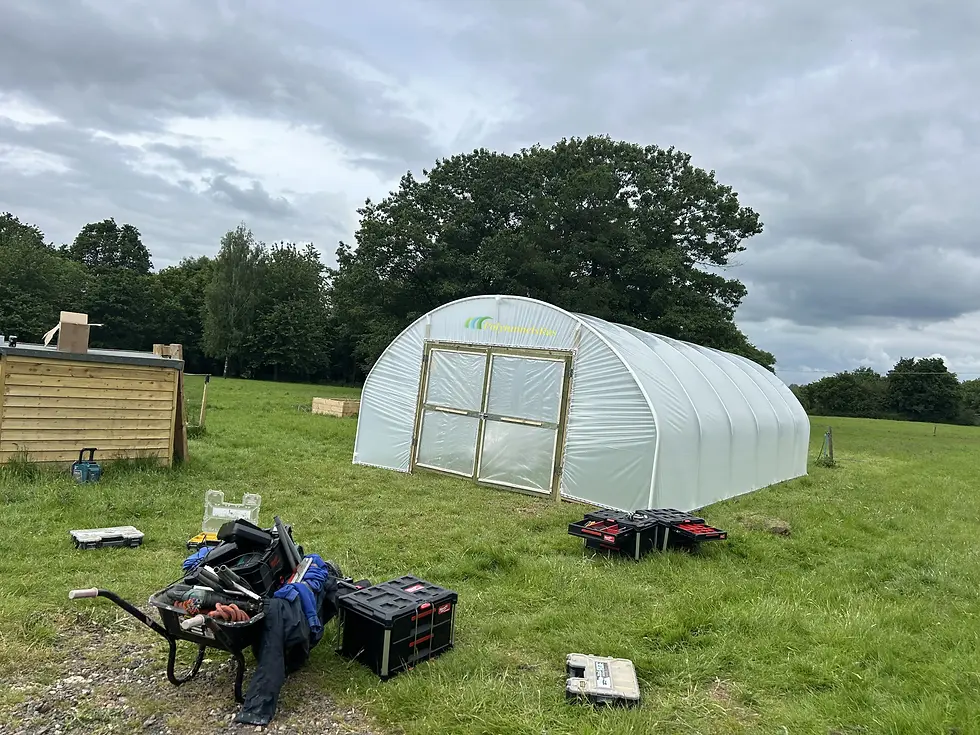
A domestic polytunnel can be used for commercial growing in some situations. That is the honest answer. If you are raising a few trays for plant sales, growing salad for a local box scheme, or testing a crop before investing properly, a domestic polytunnel may be enough to get started.
But there is a big difference between growing more than usual and relying on the tunnel for income. Once the crop has to pay its way, the weak points show quickly.
When a domestic tunnel can work
For light selling, a domestic polytunnel can do a decent job. Seedlings work. So do cut flowers, early crops, and small test batches when you are still finding your feet. If a bad week would irritate you but not sink the business, the cheaper tunnel has a place.
Be honest about the workload, though. A domestic polytunnel is not made for constant footfall, heavy crop wires, wide machinery access, or an exposed site. You can still grow good produce in one. Plenty of people do. You just need to know where the limits are.
If you are trialling a crop, a domestic polytunnel can be a sensible first step. If you are supplying shops, restaurants, or regular customers, I would start looking at a stronger frame and a more planned polytunnel installation.
Where commercial use changes the job
Commercial growing adds pressure. Doors are opened more often. Covers take more wear. Ventilation becomes more important. Irrigation gets added. Paths need to stay workable in bad weather. A domestic polytunnel can cope with some of that, but not always for long.
Frame strength matters too. The wider and longer the tunnel gets, the more wind it has to endure. This is where a light domestic polytunnel can start feeling like a false saving. If the tunnel twists, lifts, or rubs through the cover, the repair bill can wipe out what you saved at the start.
For a proper growing business, structure is not just about neatness. Lose it at the wrong moment, and you lose crop, hours, and money.
DIY or Paid Fitting?
Yes, if the tunnel is small and the site is good. Polytunnel installation means measuring carefully, getting things level, digging properly, pulling the cover cleanly, and taking your time with the doors. DIY polytunnel installation rewards patience more than cleverness. A domestic polytunnel is often designed with self-installation in mind.
Do not rush the groundwork. Most problems with polytunnel installation begin before the cover goes on. If the base rails are out, the hoops are not aligned, or the site catches strong crosswinds, the finished tunnel is more likely to fail on you in the future. That is where polytunnel installation gets less forgiving.
The cover is the fiddly bit. Too loose and it flaps. Too tight and it strains. Wait for a calm, mild day if you can. Cold film can be harder to tighten. Hot film stretches more than you expect.
When to use a polytunnel company
Use a polytunnel company if the tunnel is large, exposed, business-critical, or difficult to access. Also, use one if you need wider doors, side ventilation, crop bars, irrigation planning, or several tunnels laid out together. Good polytunnel installation is a practical skill, plus a fair bit of judgement.
A polytunnel company should notice problems early on before they become expensive. Drainage. Prevailing wind. Door position. Anchoring. Cover tension, and how people move through the tunnel.
This matters far more when the tunnel is used every day.
For a small domestic polytunnel in a sheltered garden, doing the polytunnel installation yourself is perfectly reasonable. For commercial growing, I would pause before taking the DIY route. Paid polytunnel installation can be cheaper in the end if it prevents early cover damage, poor ventilation, or a tunnel that fights you from day one.
So, what is the sensible answer?
A domestic polytunnel can be used commercially, but only at the lighter end of commercial growing. Trials, small batches, and low-risk selling are its comfort zone. When the tunnel becomes central to production, stronger materials start to make much more sense.
Unsure? Start with the workload. How often will the tunnel be opened? How valuable is the crop? How exposed is the site? How much would a failed cover cost you?
Answer those questions honestly, and the choice becomes clearer. A domestic polytunnel can be a useful stepping stone. A well-planned polytunnel installation is what turns protected space into dependable working space.
Read More:


Comments